
When a company goes into Administration, it usually means things have reached a point where creditor pressure is building but the business still has some value. That value might sit in the workforce, contracts, premises, brand or the business as a whole.
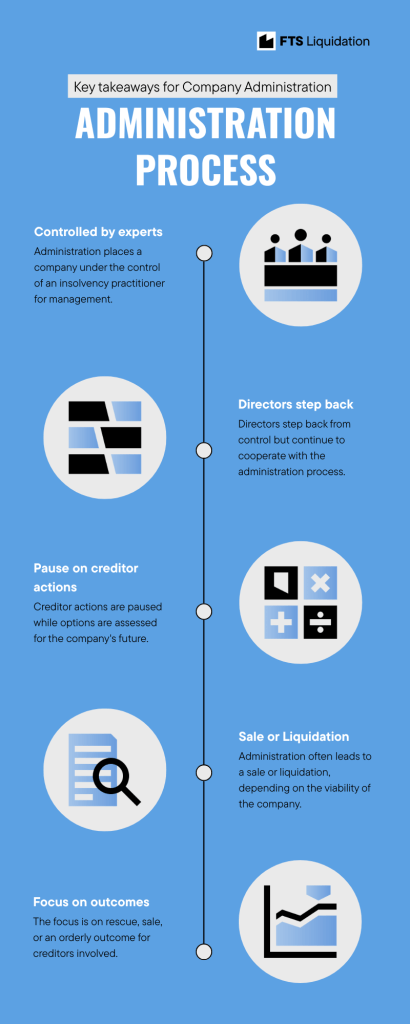
Administration is a formal insolvency process. It gives the company legal breathing space and hands control to a licensed insolvency practitioner, known as the administrator. What happens next follows a set legal framework but the outcome depends on the company’s circumstances.
When administration begins
Administration starts when an administrator is formally appointed, by directors, a creditor or the court. From that moment:
- Day-to-day control moves from directors to the administrator
- A statutory moratorium comes into force
- Most creditor action is paused
The moratorium is a central feature of Administration. It means creditors cannot usually pursue court action, enforcement or winding-up proceedings while the administrator reviews the position.
What the administrator does first
Once appointed, the administrator takes responsibility for the company’s affairs. Their role is to act in the interests of creditors as a whole and to decide what outcome delivers the best overall result.
Early steps normally include:
- Securing company assets and records
- Reviewing cash flow, debts and funding
- Deciding whether the business can continue trading
- Speaking with key parties such as lenders, landlords and senior staff
In some cases, the business continues trading for a short period. In others, trading stops quickly because continuing would reduce the value available to creditors.
The purpose of administration
The administrator must work towards one of three legal objectives:
- Rescuing the company as a going concern
This means saving the company from sale or closure. This outcome is possible where debts can be stabilised and the business has a realistic future. - Achieving a better result for creditors than liquidation
This is the most common route. It often involves selling the business or its assets in a way that preserves more value than an immediate shutdown. - Realising assets to repay certain creditors
If neither rescue nor sale is achievable, the administrator focuses on selling assets before the company moves into liquidation.
What happens to the business during administration?
What happens in practice depends on where the value sits. Common outcomes include:
A sale of the business as a going concern: This may happen very quickly, sometimes immediately after Administration begins, or after a short marketing period.
Sales of individual assets: Stock, equipment, intellectual property or property may be sold separately if that produces a better return.
An orderly wind-down: Trading stops, assets are sold and the company later enters liquidation.
Administration is often used where timing matters. Keeping staff, licences or customer relationships intact can make a significant difference to value.
What happens to directors
Directors remain in place but no longer run the company. The administrator makes the decisions and you’re expected to support the process, including:
- Providing financial information and records
- Explaining how the business has been trading
- Answering questions about assets and liabilities
The administrator also has a legal duty to submit a director conduct report. For most directors, this is a routine part of the process and does not lead anywhere further.
What happens to employees
If the business continues or is sold, employees may transfer to a new owner, often with their roles and continuity preserved.
If the business cannot continue, redundancies may follow. In that situation, employees can usually claim statutory payments such as unpaid wages, holiday pay and redundancy through the government scheme, within set limits.
How administration comes to an end
Administration is not permanent. It usually ends in one of three ways:
- The company is rescued and control returns to directors
- The business or assets are sold and the company moves into liquidation
- The company is dissolved once assets have been dealt with
Administration typically lasts up to 12 months, although it can be extended in certain circumstances.
Get advice on administration
Administration can be a viable option where there is still value in the business. But it isn’t the right fit in every situation.
If you’re under pressure and unsure what Administration would actually mean for your company, speaking to a qualified insolvency practitioner can help clarify your position. A short conversation can explain whether Administration is appropriate or whether another route would make more sense.
Early advice gives you clearer choices and more control over what happens next. Get in touch with our experts to talk about your options.